From the blog
How to Stage Your Home to Sell Faster and for More Money
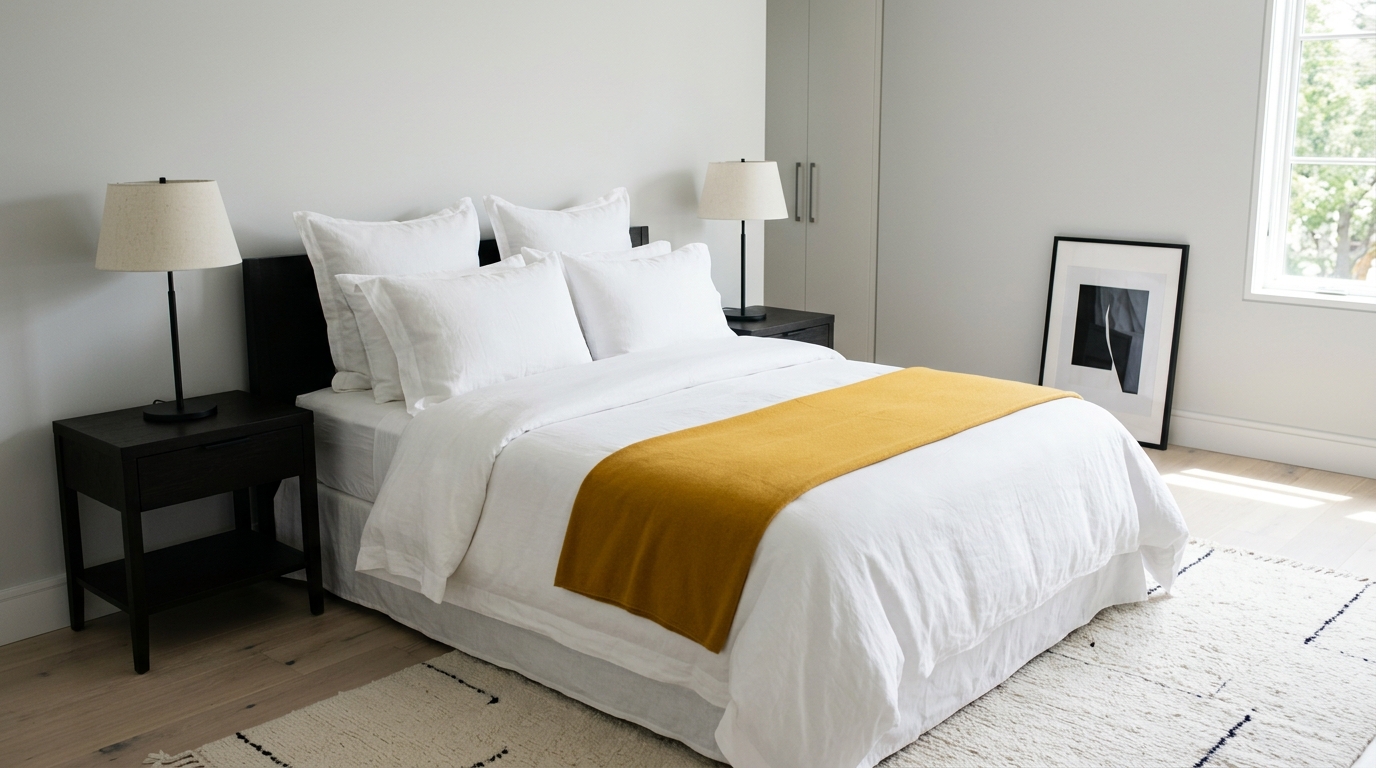
Staged homes sell 73% faster and for 1–10% more than unstaged properties, according to National Association of Realtors research. The strategy is straightforward: transform your lived-in space into a buyer's blank canvas, and competition drives the price up. Here's exactly how to do it room by room.
Why Home Staging Works
Buyers form a gut-level impression within the first eight seconds of entering a home. Staging controls that impression. It shifts attention from your personal belongings to the home's actual square footage, light, and flow. Buyers stop seeing "someone else's house" and start picturing their own life inside it.
The financial case is hard to ignore. The average staging investment runs between $1,500 and $3,500 for a professional stager. On a $450,000 home, even a conservative 2% price increase nets $9,000 - more than doubling the staging spend. For vacant homes, virtual staging services now run $150–$400 per room and are standard in most markets.
Step 1: Declutter Ruthlessly Before Anything Else
Decluttering is free and has the highest ROI of any staging step. Remove everything that doesn't serve a deliberate visual purpose. That means:
- All countertop appliances except one or two decorative items
- Family photos, diplomas, and personalized art
- Excess furniture - rooms should have 50–70% of their usual furnishings
- Closet contents reduced by at least one-third (buyers open every closet)
- Pet gear, toys, and anything that signals a child or animal lives there
Rent a storage unit if you need one. Box up off-season items, sentimental objects, and any furniture that makes rooms feel cramped. A 10x10 storage unit costs roughly $100–$180 per month - a small price for a faster, higher sale.
Step 2: Deep Clean to a Hotel Standard
Buyers notice smells before they notice paint colors. Hire a professional cleaning crew for a full deep clean: grout, baseboards, inside appliances, behind toilets, window tracks, and ceiling fans. Budget $200–$500 for a thorough job on a 2,000 sq ft home.
Eliminate odors at the source - don't mask them. Wash soft furnishings, replace HVAC filters, and shampoo carpets. A home that smells like nothing is the goal. Anything that smells like pets, cigarettes, or strong food will cut your buyer pool significantly.
Step 3: Make Strategic Repairs
Fix the things buyers use to negotiate price reductions. A cracked outlet cover costs $2 to fix but signals neglect. Prioritize these repairs before listing:
- Caulk and grout- re-caulk showers, tubs, and sinks
- Paint touch-ups- or full interior repaint in a neutral palette
- Hardware- replace dated cabinet pulls and door handles
- Lighting fixtures- swap brass or dated fixtures for brushed nickel or matte black
- Leaky faucets and running toilets- these broadcast maintenance neglect
A full interior repaint in a light, warm neutral (Benjamin Moore White Dove OC-17 and Sherwin-Williams Accessible Beige SW-7036 remain two of the top-performing staging colors) typically costs $2,000–$5,000 for a 2,000 sq ft home and can add $5,000–$15,000 in perceived value.
Step 4: Stage the Rooms That Matter Most
Not every room needs equal attention. Concentrate your budget and energy where buyers spend the most mental time.
Living Room
Float furniture away from walls - this is the single most common staging mistake to fix. A sofa anchored to the wall makes a room feel smaller, not larger. Create a conversational arrangement that guides the eye toward the room's best feature (fireplace, large window, built-ins). Use a large area rug to define the seating zone.
Kitchen
Clear every countertop except a bowl of fruit or a single coffee station setup. Regrout tile, replace a dated faucet, and paint or reface cabinet doors if they're significantly worn. Kitchen staging delivers the highest return of any room - staged kitchens consistently lead buyer feedback surveys as the most memorable space in the home.
Primary Bedroom
Buyers want to feel like they're walking into a boutique hotel. Use crisp white bedding with two or three decorative pillows. Remove all clothing from open sight lines, minimize nightstand clutter to a lamp and one small item per side, and add blackout curtains in a neutral linen tone to make the room feel curated.
Bathrooms
White towels, white hand soap, a small plant or candle, and nothing else on the counter. Hide all personal care products. Replace a dated mirror if your budget allows - a $150 mirror swap can make a bathroom feel 10 years newer.
Step 5: Maximize Light
Light is the single most universally desired quality in a home. Open every blind and curtain for showings. Replace bulbs throughout the entire home with 2700K–3000K warm-white LEDs at 800+ lumens per fixture. Add lamps to dark corners. If your home has low-light rooms, rent or buy inexpensive floor lamps - a $60 arc lamp from IKEA changes a dim room completely.
For listing photos (which now drive 95%+ of first impressions in the current market), schedule the shoot during the time of day when your home gets the most natural light. Professional real estate photographers using HDR bracketing will make any staged home look significantly better than smartphone shots.
Step 6: Don't Ignore Curb Appeal
The listing photo buyers see first is almost always the exterior front. Mow, edge, and mulch fresh mulch in all beds. Paint the front door a bold but tasteful color - navy, forest green, and deep red all test well with buyers. Replace a dated house number, add potted plants flanking the entry, and pressure-wash the driveway and walkway. This costs $200–$600 and dramatically improves the click-through rate on your listing.
Staged vs. Unstaged: A Direct Comparison
Factor Unstaged Home Staged Home Average days on market 58–90 days 23–30 days Price relative to list 1–3% below list 1–5% above list Buyer perception of condition Fair to good Excellent to move-in ready Online listing click-through Lower engagement 40–60% higher engagement Multiple offer likelihood Low High in competitive marketsWhen to Hire a Professional Stager
Hire a professional stager when your home is vacant, when you're selling above the $600,000 price point, or when your personal style is highly distinctive. A Certified Staging Professional (CSP) or Accredited Staging Professional (ASP) credential signals real training. Professional stagers typically charge a $300–$500 consultation fee, with full staging packages running $1,500–$6,000 depending on home size and whether furniture rental is involved.
For homes under $400,000 in competitive markets, a two-hour consultation plus DIY execution of their recommendations delivers most of the benefit at a fraction of the cost.
How much does home staging cost on average?
Professional home staging costs $1,500–$6,000 for a full-service package, including furniture rental if the home is vacant. A one-time consultation runs $300–$500. DIY staging using your existing furniture costs $200–$800 in supplies, cleaning, and minor repairs. Virtual staging for vacant homes runs $150–$400 per room.
Does staging really increase the sale price?
Yes. Staged homes sell for 1–10% more than comparable unstaged properties. On a $450,000 home, a 2% premium equals $9,000 - well above typical staging costs. The primary mechanism is competitive pressure: a staged home attracts more buyers, which drives multiple offers, which pushes the final sale price above list.
What rooms should I prioritize when staging on a budget?
Focus your budget in this order: living room first, kitchen second, primary bedroom third. These are the three rooms that most directly influence buyer decisions. A tidy, well-lit bathroom is important but requires less investment than the main living spaces.
Should I stage my home if the market is already hot?
Staging in a hot market amplifies results rather than creating them. In a seller's market, a staged home doesn't just sell - it creates bidding wars that push final prices 5–15% over asking. Sellers who skip staging in hot markets often leave $10,000–$30,000 on the table compared to their staged neighbors.
How long does it take to stage a home before listing?
Expect 1–3 weeks for a thorough DIY staging process including decluttering, cleaning, minor repairs, and furniture arrangement. A professional stager working with existing furniture can complete the process in 1–2 days of active work. If furniture rental is involved, add 3–5 business days for delivery and setup coordination.


