From the blog
What First-Time Homebuyers Wish They Knew Before Closing
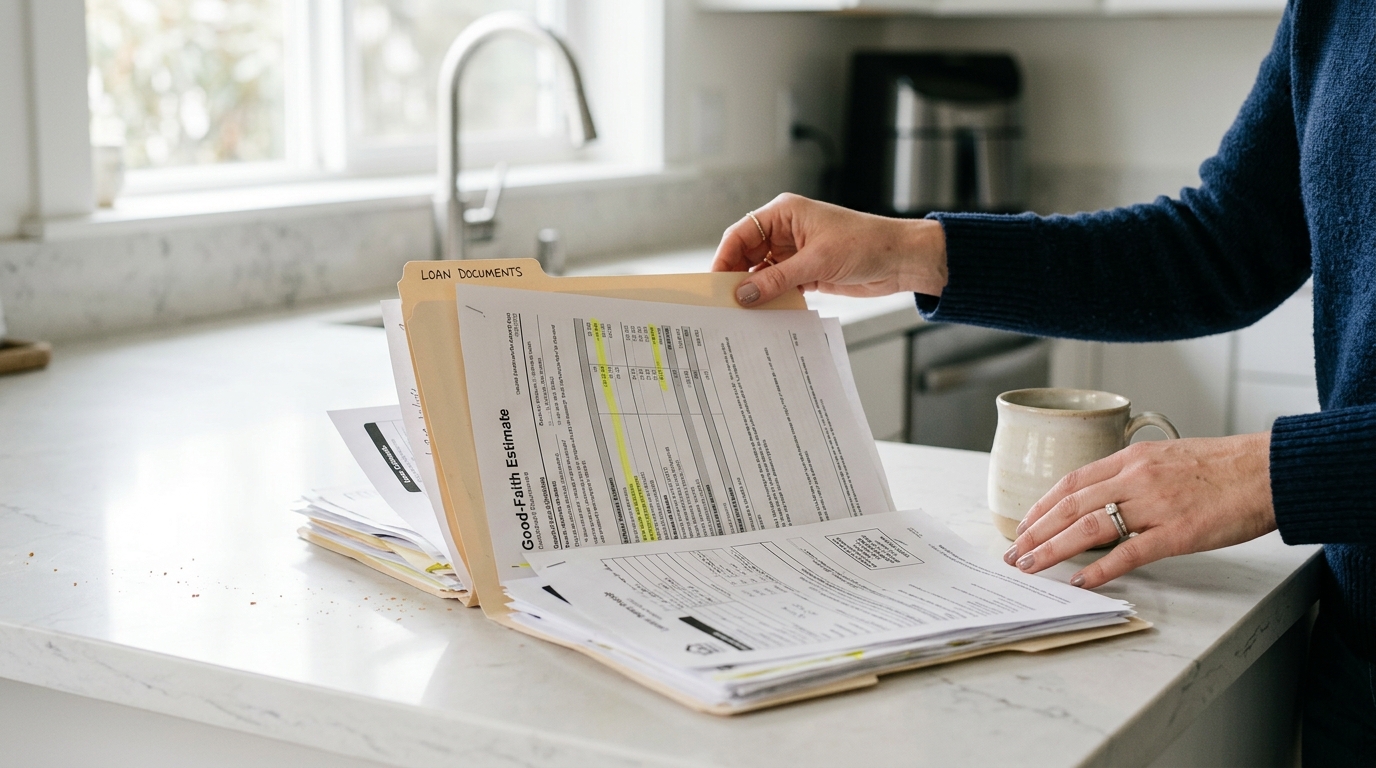
First-time homebuyers consistently report the same regrets: they underestimated closing costs, misread their loan terms, skipped the final walkthrough, or trusted verbal promises that never made it into the contract. Knowing these pain points before you sit down at the closing table saves you thousands of dollars and months of frustration.
Closing Costs Are Bigger Than You Think
Most buyers budget for the down payment and forget everything else. Closing costs typically run 2% to 5% of the loan amount. On a $400,000 home, that's $8,000 to $20,000 in fees you need liquid - not tied up in your down payment savings.
Those costs include:
- Loan origination fees- usually 0.5% to 1% of the loan amount
- Title insurance- lender's policy plus optional owner's policy
- Appraisal fee- typically $400 to $700 for a standard single-family home
- Prepaid interest- covers the days between closing and your first payment
- Homeowner's insurance- first year paid upfront at closing
- Property tax escrow- lenders often require 2–6 months deposited into escrow
- Attorney or settlement fees- varies by state, ranging from $500 to $1,500
Request a Loan Estimate within three business days of applying - lenders are required to provide one. Then compare it line by line against the Closing Disclosure you receive at least three days before closing. Discrepancies happen, and you have the right to question every one.
Your Loan Terms Can Change Before Closing - Unless You Lock
Interest rates move daily. If you get pre-approved at one rate and don't lock it in writing, that rate is not guaranteed. A rate lock freezes your rate for a defined period - typically 30, 45, or 60 days. Confirm the lock expiration date and what happens if your closing gets delayed. Some lenders charge a fee to extend; others absorb it. Know this before you need it.
Also understand the difference between a fixed-rate and an adjustable-rate mortgage (ARM). A 5/1 ARM gives you a fixed rate for five years, then adjusts annually. For buyers who plan to move within five years, an ARM can mean a lower initial rate. For buyers who plan to stay long-term, a fixed rate eliminates future payment uncertainty.
The Final Walkthrough Is Not Optional
The final walkthrough - typically done 24 to 48 hours before closing - is your last chance to verify the home is in the condition specified in your contract. Buyers who skip it discover problems only after the keys are theirs and the seller is gone.
During the walkthrough, check every item that was agreed upon in negotiations, plus:
- All appliances that convey with the sale (run the dishwasher, oven, and HVAC)
- Plumbing - run every faucet, flush every toilet
- Light fixtures and electrical outlets
- Any repairs the seller agreed to make in writing
- Items that should still be in the home (fixtures, window treatments, built-ins)
- Any new damage from the seller moving out
If you find a problem, you can negotiate a credit, delay closing, or require the issue be resolved. Document everything with photos and timestamps.
Title Issues Can Derail Closing at the Last Minute
A clear title means the seller has the legal right to transfer ownership to you with no competing claims. Title searches sometimes uncover unpaid liens, unresolved estate claims, boundary disputes, or even clerical errors recorded decades ago. These don't always surface until the title company does its search - which happens weeks into escrow.
Buy an owner's title insurance policy. Your lender requires their own policy, which protects the lender - not you. The owner's policy protects your equity against any future claims that survived the title search. A one-time premium at closing is inexpensive compared to the cost of defending ownership in court.
Verbal Promises from the Seller Mean Nothing
If it is not in the purchase contract or an addendum signed by both parties, it does not exist legally. Buyers frequently accept verbal assurances - "the seller said the roof was replaced," "they promised to leave the riding mower" - that vanish the moment the deed transfers.
Everything negotiated must be in writing: personal property that stays, repairs to be completed, closing cost credits, occupancy agreements, and any seller disclosures. Your real estate agent should handle this, but read every document yourself before signing.
Your Credit Score Should Not Change Between Pre-Approval and Closing
Lenders pull your credit a second time right before closing. Buying furniture on a new credit card, financing a car, co-signing a loan, or even applying for a retail store card between pre-approval and closing can lower your score enough to change your loan terms - or kill the deal entirely.
Follow a simple rule: make no new credit applications and no large purchases on existing credit from the moment you go under contract until the loan funds. Keep your financial profile identical to what the lender originally approved.
Homeownership Has Ongoing Costs Buyers Forget to Budget
Your mortgage payment is not your total cost of ownership. Financial planners commonly recommend budgeting 1% to 2% of the home's value annually for maintenance and repairs. On a $400,000 home, that's $4,000 to $8,000 per year - on top of your mortgage, taxes, insurance, and HOA dues if applicable.
Costs that catch first-time buyers off guard include:
- HVAC servicing and eventual replacement (average replacement cost: $5,000–$12,000)
- Roof repairs or replacement ($8,000–$20,000 depending on size and material)
- Water heater replacement ($800–$2,500)
- Pest control and termite inspections
- Lawn maintenance and landscaping
- HOA special assessments - large one-time charges for shared-property repairs
Build a dedicated home maintenance fund from day one. Start with 1% of the purchase price and grow it over time.
First-Time Homebuyer Programs Can Cut Your Costs Significantly
Many buyers don't know these programs exist until after they've already closed. Federal, state, and local programs offer down payment assistance, reduced-rate loans, and closing cost grants specifically for first-time buyers. The U.S. Department of Housing and Urban Development (HUD) maintains a directory of approved housing counseling agencies and state-specific programs.
FHA loans require as little as 3.5% down with a credit score of 580 or higher. Fannie Mae's HomeReady and Freddie Mac's Home Possible programs allow 3% down with income limits. Some state programs layer on top of these, providing forgivable second mortgages to cover down payment and closing costs entirely.
Talk to a HUD-approved housing counselor before you start shopping. It's free and can save you tens of thousands of dollars.
Quick Reference: What to Do vs. What to Avoid Before Closing
Do This Avoid This Lock your interest rate in writing Assuming a quoted rate is guaranteed Review your Closing Disclosure line by line Signing documents without reading them Complete the final walkthrough Skipping the walkthrough to save time Buy an owner's title insurance policy Relying only on the lender's title policy Get all seller promises in a signed addendum Trusting verbal agreements Keep credit activity frozen until closing Opening new credit accounts or financing purchases Build a home maintenance reserve fund Spending all savings on the down paymentFirst-time Homebuyers Before Closing FAQ
How much cash do I actually need at closing beyond the down payment?
Plan for 2% to 5% of the loan amount in closing costs on top of your down payment. On a $350,000 loan, that's an additional $7,000 to $17,500. Some of this can be negotiated as seller concessions or covered by lender credits, but those options reduce your flexibility elsewhere in the deal.
Can I negotiate closing costs with my lender?
Yes. Lender origination fees, application fees, and some third-party service fees are negotiable. You can also shop for your own title company, settlement attorney, and homeowner's insurance provider rather than accepting whoever the lender defaults to. Comparing vendors on the same Loan Estimate can save hundreds to over a thousand dollars.
What happens if I find a problem during the final walkthrough?
You have three options: request a credit at closing to cover the repair cost, require the seller to fix the issue before closing proceeds, or delay closing until the problem is resolved. Your real estate agent and attorney should document the issue in writing immediately and communicate it to the seller's agent before the closing appointment.
Do I need a real estate attorney at closing?
Some states legally require a real estate attorney to be present at closing; others don't. Even where it's optional, having an attorney review your purchase contract and closing documents protects you from overlooking unfavorable terms. Attorney fees for a standard residential closing range from $500 to $1,500 - a reasonable cost for reviewing a $300,000+ transaction.
What is the difference between pre-qualification and pre-approval?
Pre-qualification is an informal estimate based on self-reported financial information - it carries no real weight with sellers. Pre-approval involves a full credit pull, income verification, and asset documentation reviewed by an underwriter. In a competitive market, sellers and their agents treat pre-approval as the minimum requirement for taking an offer seriously. Always get pre-approved before making an offer.


